Beatriz Milhazes on Color, Nature, and Art That Lives in Your Pocket
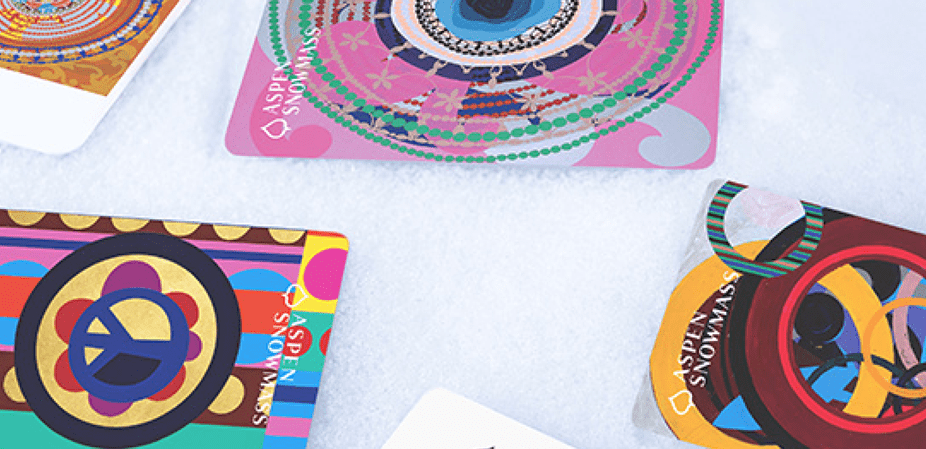
Beatriz Milhazes is the featured artist for Aspen Snowmass' Art in Unexpected Places (ArtUP) program for the 2026-2027 season, with her work appearing on lift tickets and Aspen Cards, and in a large-scale installation at the Silver Queen Gondola station at the base of Aspen Mountain. For over 20 years, Aspen Snowmass has featured the works of contemporary artists across ski passes, lift tickets, and season passes, as well as showcased through creative outlets including installations on-mountain, in our hotels and restaurants, at special events, and through collaborative merchandising.
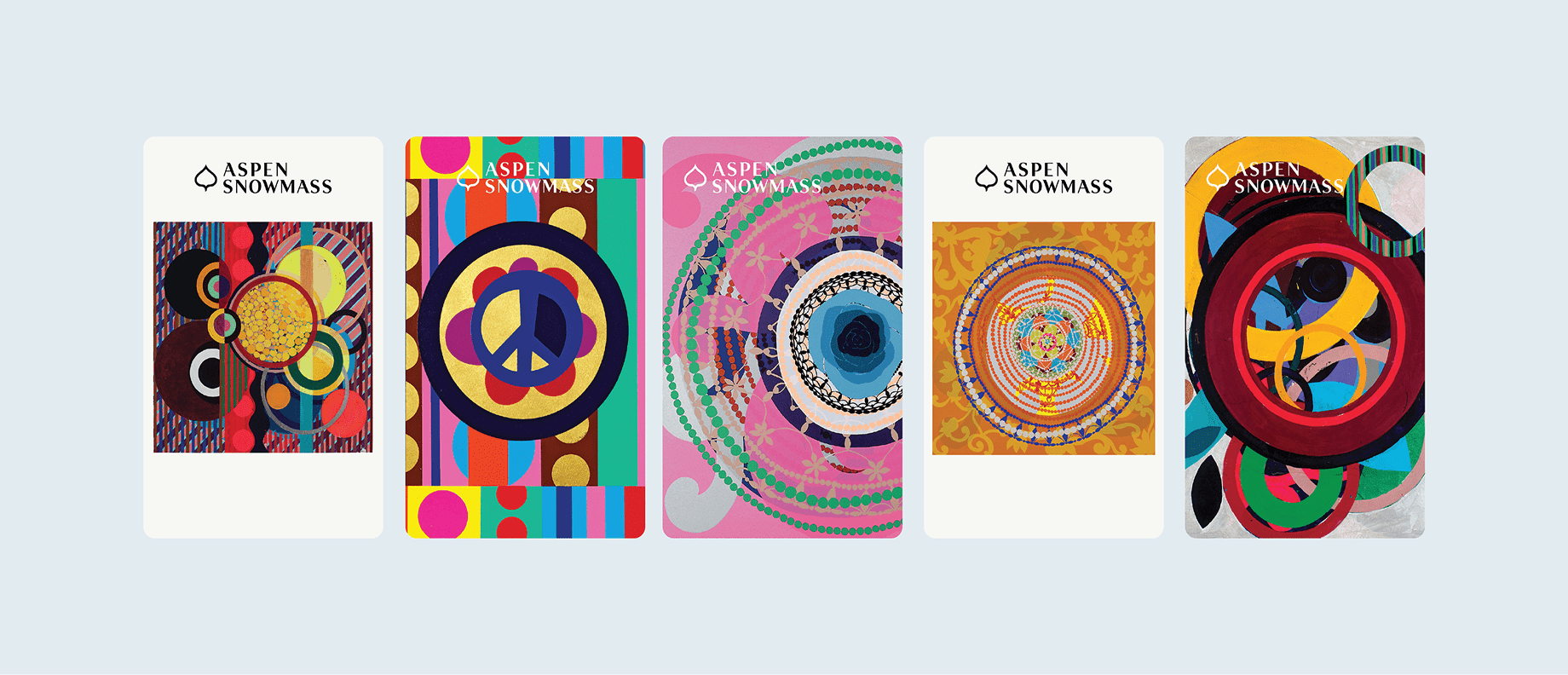
Aspen Snowmass 2026-27 lift ticket artwork laid out in a row
The first time Beatriz Milhazes brought her work to an audience that wasn't expecting it, she was wrapping a seven-story façade of Selfridges department store in Manchester in color and light. The year was 2004. She was working from an architectural plan, translating her visual language — those layered circles, flowers, and vines — into a stained-glass effect played out across glass and metal at building scale. Thousands of people passed through it every day who had not come to see art.
"I just loved the possibility of bringing my art to an audience that was not expecting it," she says, "and to open a special experience from this sensible moment."

This winter, she brings that same thinking to the mountains.
Born in Rio de Janeiro in 1960, Milhazes came of age during a pivotal moment in Brazilian contemporary art. In the 1980s, she stood at the forefront of Geração 80, a movement that brought painting back to the center of a conversation dominated by conceptualism. Her visual language draws from everything around her: Baroque colonial architecture, Catholic iconography, the exuberant contrasts of Rio's social and religious life. Her studio sits beside the Botanic Garden. Nature, she says, has always been a primary source.
"Everything starts with my context of Rio de Janeiro. It's a city that has oceans, mountains, forests. It's very exuberant, full of contrasts."
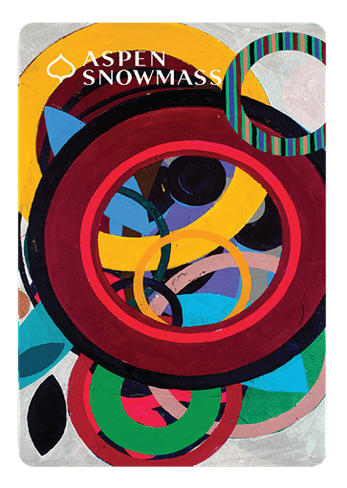
The five works selected for this season's lift tickets and Aspen Cards were chosen, she says, as "a kind of delicate introduction to my art language and how it relates to nature." Her inspiration spans Baroque to modernism, popular art to pop culture, architecture to abstraction. "Each form emerges and develops from a specific universe, and colors make it happen."
Whether work born from a tropical city can speak to the Colorado Rockies is a question Milhazes answers directly: nature is nature.
"It doesn't matter if under the snow or in a tropical environment," she says. "We do need to understand that nature is about life."
That conviction extends to what she hopes people feel when they encounter her work on a chairlift, or stepping off a gondola. "Art is about life and nature," she says. "It can make you think differently. The world, more than ever, needs poetry and beauty, not the cosmetic kind, but the one that will take you to a spiritual connection."
The gondola installation — large-scale transparent colored vinyl applied directly to the station's glass — is designed to be exactly that. Like Manchester more than two decades ago, it transforms a building people pass through en route to the top of Aspen Mountain into a place they might pause inside of. A terminal that in and of itself an insallation. "I hope this will happen as a special human experience," she says.
In 2025, Milhazes became the first Brazilian artist to mount a solo exhibition at the Solomon R. Guggenheim Museum in New York. Her work hangs in the permanent collections of MoMA, Tate Modern, and the Centre Pompidou. This winter, it lives in the pocket of anyone riding a lift at Aspen Snowmass. Beatriz Milhazes' work will be on display at Aspen Snowmass through September 2027.